P / 01 · Multi-agent platform · Authorization
Agora
A self-hosted multi-agent platform where every agent acts through the same permission checks, human review and audit trail. Its first production agent handles email.
Open source · Apache 2.0
Explore repositoryAgora is the open-source version of BIAM AI, the platform I designed and built during my AI & Security Engineering internship at BIAM Consulting.
- Java
- Spring Boot
- Python
- LangGraph
- React
- PostgreSQL
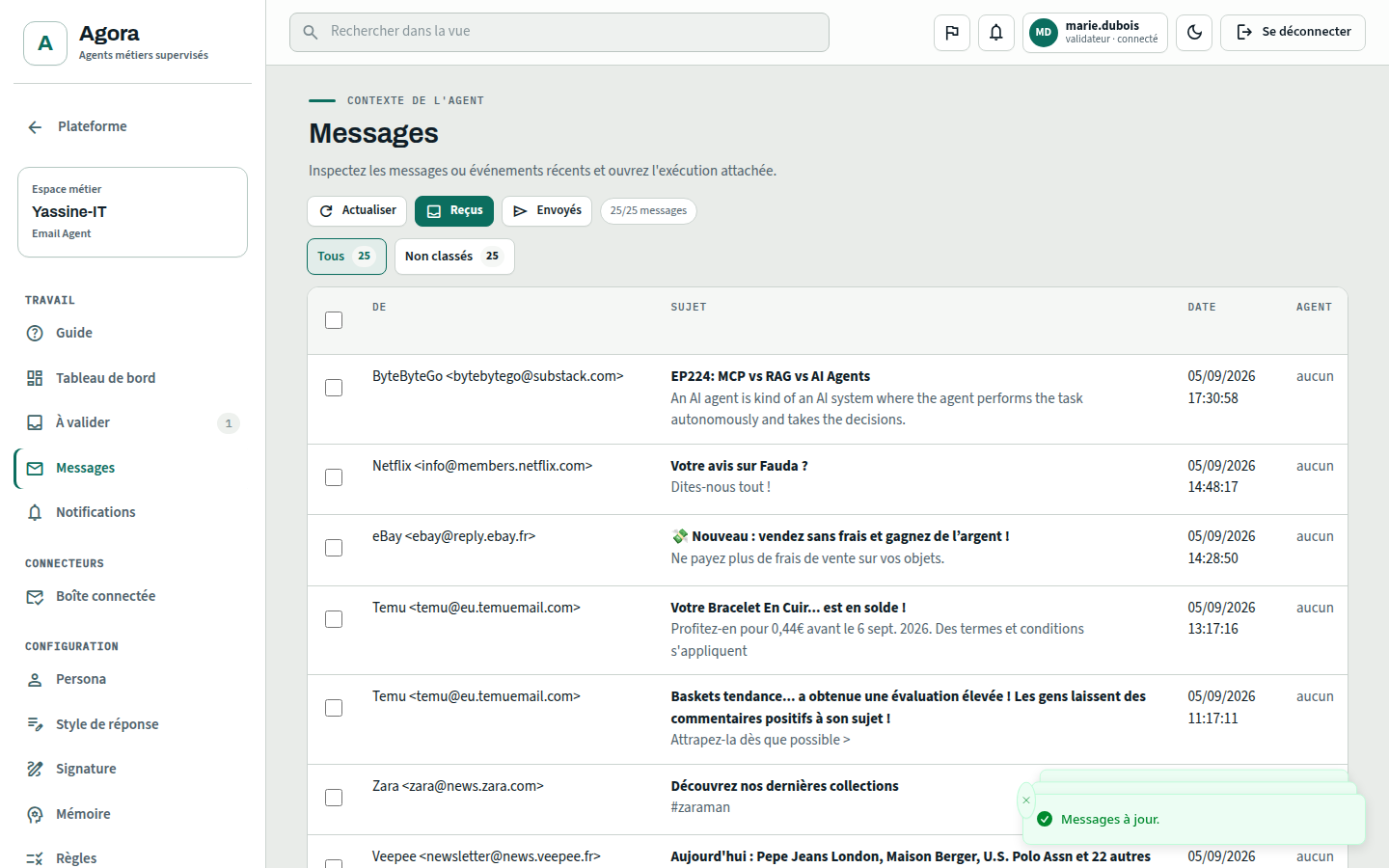
The inbox connects incoming messages to their agent workflows. Original project screenshot.
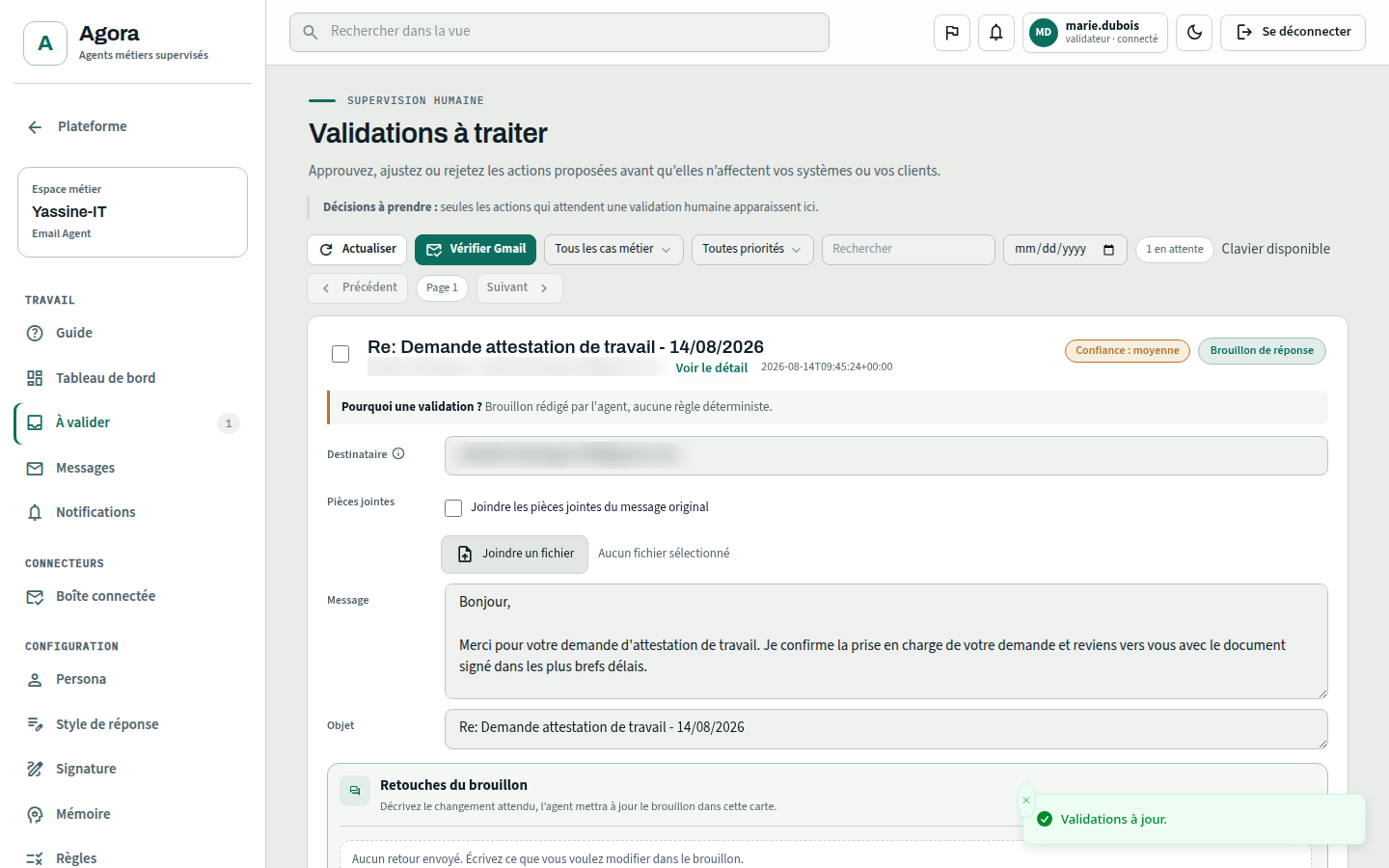
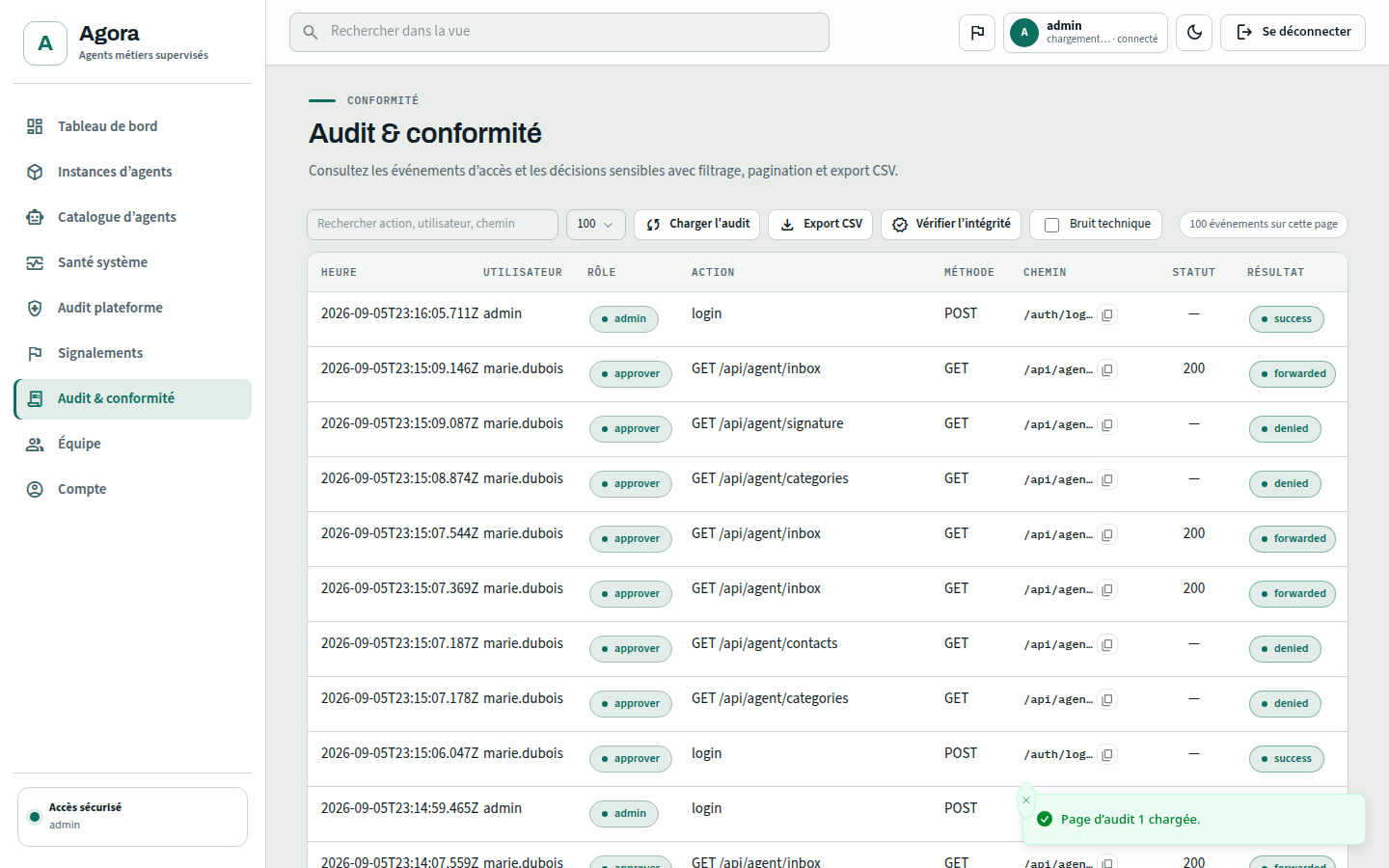
The inbox connects incoming messages to their agent workflows. Original project screenshot.
Image sourceProblem & users
Agora is the platform: agents plug into shared services instead of each reinventing permissions, approvals and logging. Any action an agent proposes passes an explicit permission check, and consequential ones wait for a human. The email agent is the first one running on it, drafting, sending and forwarding mail for operators who approve what matters.
Implementation
The platform layer is agent-agnostic: a Spring Boot gateway handles authentication and roles, a separate security service evaluates tool capabilities, and the React interface shows pending approvals and the audit trail for every agent. The email agent is a Python service using LangGraph for workflow state, calling the platform before each tool action.
Engineering decision
Keep authorization outside the model. Each tool call receives an allow, human-review or deny decision. Editing an approved draft triggers authorization again before execution. Gateway actions are recorded in a SHA-256 hash chain that can be checked for changes.
Evidence
The approval-queue and audit screenshots show the review workflow. The policy evaluator, agent graph and audit service provide the corresponding implementation; the security model documents its trust boundaries.
Current limitations
- Only the email agent ships today; a second independent agent has not validated the platform contract. Outlook has not been verified against a live mailbox, and the frontend has no automated test suite.
- Prompt-injection defenses mitigate known patterns; they do not eliminate the risk. There has been no formal third-party security audit. Most endpoints have no rate limiting.
- LangGraph checkpoint isolation relies on application checks rather than database row-level security. Audit writes are synchronized within one gateway instance; scaling needs database coordination. Actor anonymization reseals the chain, so verification then covers changes since that operation.
On GitHub
Self-hosted, capability-isolated AI agent platform
- Python
- 1 star
- Updated
- ai-agents
- langgraph
- rbac
- react
- self-hosted
- spring-boot
Sources
Reviewed at revision 6958b5d.